By Michael Phillips | FLBayNews
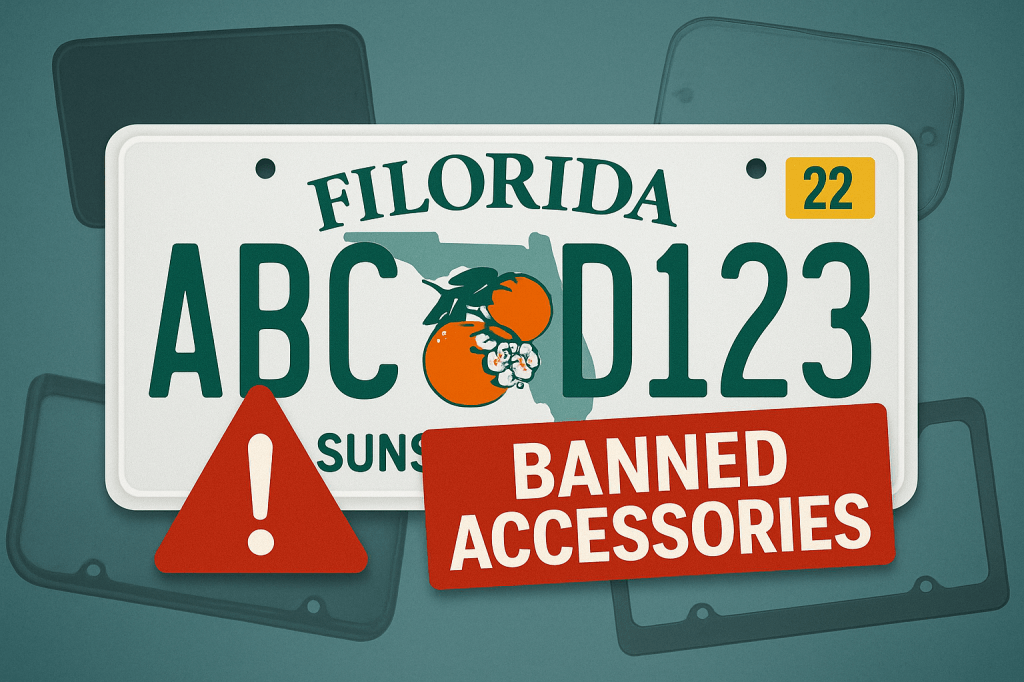
Florida drivers who rely on common license plate frames, tints, covers, or protective accessories are waking up to a new reality: as of January 1, 2026, many of these everyday items will become illegal under a statewide effort to tighten vehicle identification rules.
The updated statute—passed earlier this year but now gaining renewed attention—makes it unlawful to obscure any part of a Florida license plate, even if the text or numbers remain perfectly readable. That includes many accessories routinely sold in auto shops, car washes, and online marketplaces. The law is leaving many drivers asking whether the state is solving a real problem or simply expanding minor infractions into fine-generating opportunities.
What’s Now Banned
Under the new law, the following items will be prohibited:
- Tinted license plate covers (even lightly tinted)
- Clear covers if they create any glare, sheen, or reflection
- Plastic or acrylic bubble covers
- Decorative borders or frames that obscure even a sliver of the plate’s edges—including county names, registration decals, or the word “Florida”
- Protective films used to prevent wear or fading
- Specialty plate wraps that alter visibility
In short: if it touches the readable area or might reduce clarity at an angle, it’s banned.
Supporters argue the changes help law enforcement identify vehicles more reliably—especially in hit-and-run cases, toll enforcement, Amber Alerts, and automated license plate reader (ALPR) systems. But critics say the law goes far beyond safety, sweeping up millions of drivers who use inexpensive frames mainly to protect their plates or support a favorite sports team.
Right-of-Center Perspective: A Fix in Search of a Problem?
For many Floridians, this feels like another case of Tallahassee stepping into daily life without solid evidence of widespread harm. The previous law already prohibited obscured numbers. Now the threshold is so strict that even dealership-issued frames—which come on nearly every newly purchased vehicle—may be considered illegal.
Conservatives argue this approach treats ordinary drivers as potential violators rather than partners in public safety. If lawmakers wanted to crack down on intentionally hidden plates, they could have targeted the small number of drivers using intentionally obstructive gadgets or reflective anti-camera devices—not the millions who use a $10 plastic cover to protect their tags from salt spray or fading.
The broader concern is government creep: everyday accessories people have used for decades are now grounds for a traffic stop. And in a state already struggling with inconsistent traffic enforcement, some worry the law creates one more subjective pretext for pulling drivers over.
Penalties: What Drivers Can Expect
Violating the new accessory rules can lead to:
- Civil penalties (typically around $100)
- A secondary offense added to a traffic stop
- Possible mandatory removal on the spot
There is currently no grace period written into the law, meaning drivers could face citations starting immediately on January 1.
Why Now?
Lawmakers behind the measure point to:
- The growth of ALPR technology
- An increase in toll violations
- Difficulty tracking vehicles in hit-and-run cases
- Reports of motorists intentionally masking plates to evade cameras
However, critics note that ALPR expansion—not traditional policing—is the primary driver here. As Florida adopts more automated tolling and surveillance systems, the burden is now shifting to citizens to ensure their plates are perfectly readable at all times, under every lighting condition, for every camera model used across the state.
What Florida Drivers Should Do Now
- Check your car today. If you use a frame, cover, or tinted protector, you may need to remove it.
- Avoid purchasing plate accessories unless you’re sure they fully comply.
- Be cautious with dealership frames—many of them may now be technically illegal.
- Expect heightened enforcement early in 2026 as the law rolls out.
Bottom Line
This new crackdown may help a subset of law enforcement functions, but it also reinforces a growing concern among Floridians: that the state is increasingly relying on citizens to subsidize automated enforcement systems by eliminating harmless accessories and expanding the list of citable offenses.
For many drivers, getting pulled over for a decorative license plate frame isn’t exactly the freedom Florida is known for.
 Florida Bay News
Leave a comment