By Michael Phillips | Florida Bay News / Father & Co.
A recent case out of Georgia is drawing renewed attention to a rarely discussed issue in family law and child support enforcement: what happens when trust is abused—and due diligence comes too late.
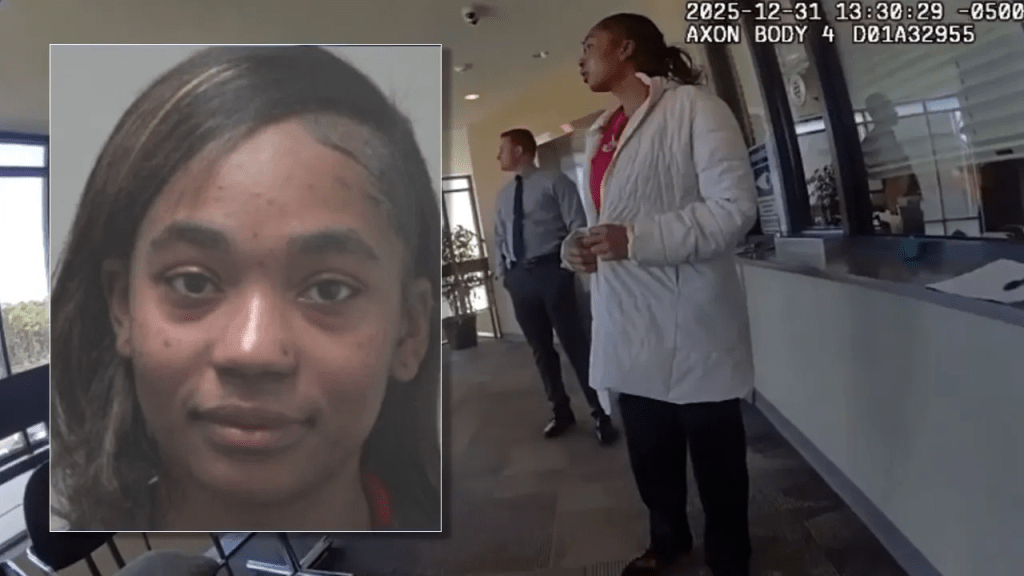
An 18-year-old woman from Coweta County, Georgia, Brya Hardy, was arrested on December 31, 2025, and charged with theft by deception after investigators say she falsely claimed her ex-boyfriend was the father of a baby and collected roughly $7,000 in child support payments under that pretense. According to local reporting, the child was later determined to be unrelated to either party and reportedly belonged to someone else entirely.
The case came to light after the alleged victim reported the situation to the Coweta County Sheriff’s Office in early December. Following an investigation that included paternity testing and corroborating evidence, authorities arrested Hardy on New Year’s Eve. She was later released on bond, and as of early January, no additional charges or victims have been formally identified.
A Local Case With Broader Implications
On its face, this appears to be a localized fraud case—limited coverage, no federal charges, and no confirmed ties to organized schemes. But the underlying dynamics raise uncomfortable questions about how easily child support claims can be weaponized before verification occurs.
In many states, including Georgia, informal child support arrangements often begin long before courts, agencies, or DNA testing enter the picture. Good-faith assumptions—particularly by young or inexperienced parents—can create opportunities for deception that only surface months or years later, if at all.
From a center-right perspective, this case underscores a recurring tension in family law policy: systems built on trust and urgency can be exploited when safeguards are weak or optional. While child support enforcement is essential for children’s welfare, due process and verification matter just as much—for alleged fathers as well as for mothers.
Why This Resonates With Parents
For readers of Father & Co., the case hits close to home. False or unverified paternity claims, even when rare, can have life-altering financial and emotional consequences. Once money changes hands—or court orders are entered—the burden often shifts to the accused parent to prove a negative, a process that can be costly and slow.
Importantly, this Georgia case did not involve the court system initiating support payments; it allegedly relied on personal demands and representations. Still, it highlights why many advocates argue that paternity testing should be routine, early, and stigma-free—protecting everyone involved, including the child.
Ongoing Investigation
The Sheriff’s Office has stated it is publicizing the case to identify potential additional victims and has encouraged anyone with relevant information to come forward. As of January 6, 2026, court records remain sparse, no arraignment date has been announced, and investigators say the matter is still active.
If convicted under Georgia’s theft by deception statute, Hardy could face significant penalties, including prison time, depending on how prosecutors proceed and whether additional victims emerge.
The Bigger Picture
This is not an argument against child support or parental responsibility. It is an argument for verification, accountability, and fairness. Systems that assume honesty without checks risk eroding public trust—and cases like this, though uncommon, fuel skepticism that ultimately harms families who play by the rules.
As states continue debating reforms to family courts and support enforcement, the lesson from Coweta County is simple: compassion and enforcement should never come at the expense of basic due process.
 Florida Bay News
Leave a comment