By Michael Phillips | FLBayNews
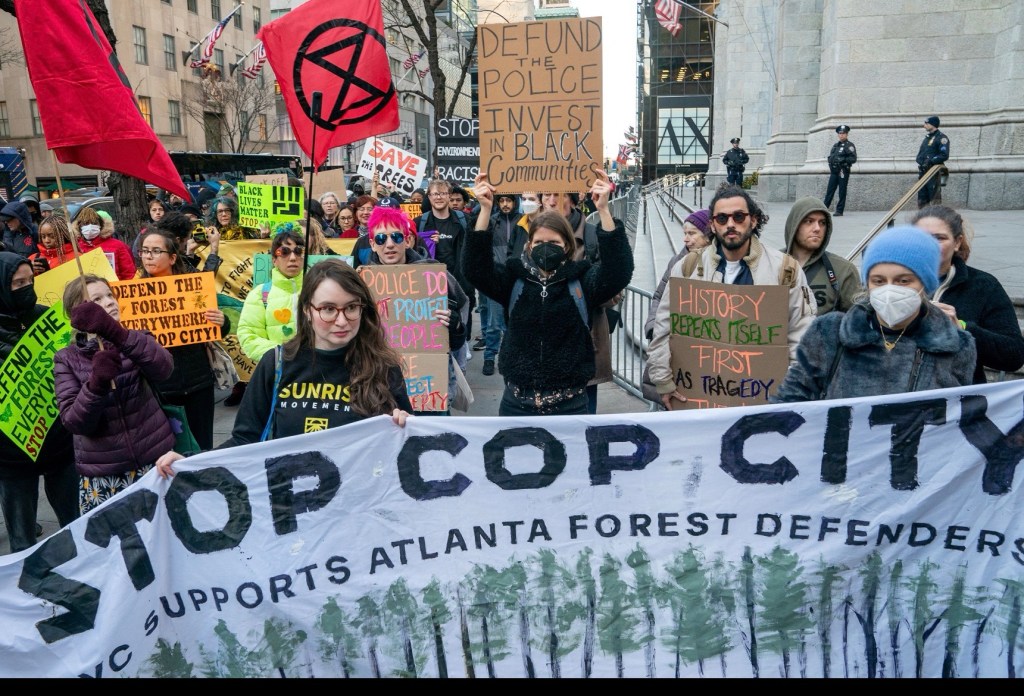
By any measure, the dismissal this week of Georgia’s sweeping RICO case tied to protests over Atlanta’s Public Safety Training Center is a major headline. But the way it’s being framed nationally risks obscuring what the ruling actually says—and what it doesn’t.
On December 30, Fulton County Superior Court Judge Kevin M. Farmer dismissed RICO charges against 61 defendants indicted in 2023. The reason was procedural, not substantive: Attorney General Chris Carr did not obtain written authorization from Governor Brian Kemp before bringing a prosecution that would normally fall under a local district attorney’s authority.
Judge Farmer made clear that the state could refile the case correctly. In other words, this was not an exoneration, not a ruling on guilt or innocence, and not a judicial declaration that alleged crimes never occurred. It was a reminder that even politically charged prosecutions must follow the law to the letter.
That distinction matters—especially given how the story is being sold.
A Case About Authority, Not Approval of Conduct
Much of the national coverage celebrates the dismissal as a sweeping rebuke of “overreach.” Civil liberties advocates argue the 109-page indictment was too broad and risked criminalizing protest itself. Those concerns deserve discussion. But they do not negate the court’s narrow holding: the attorney general lacked the required sign-off.
The ruling also leaves intact other prosecutions. Several defendants still face separate domestic terrorism and arson charges—cases the attorney general is authorized to pursue without gubernatorial approval. Those allegations include Molotov cocktails, arson of construction equipment, and coordinated attacks on officers—facts often minimized or glossed over in post-dismissal commentary.
Calling this outcome a “collapse” of the state’s case is misleading. It is a setback rooted in paperwork, not proof.
Cop City Is Built—and Operating
Another underreported reality: the project at the center of the controversy is no longer theoretical. The Atlanta Public Safety Training Center opened in April 2025 following years of protests, litigation, and political wrangling. The $90–118 million facility consolidates police and firefighter training on land previously used as a prison farm and includes modern urban simulation environments designed for de-escalation, emergency response, and coordinated public safety training.
The ribbon-cutting was attended by Governor Kemp and Atlanta Mayor Andre Dickens. A voter referendum to halt construction failed in court. For all the noise, the central policy question—whether Atlanta should invest in modern public safety infrastructure—has already been answered.
Protest, Violence, and the Rule of Law
Supporters of the training center argue that Atlanta’s previous facilities were outdated, scattered, and costly to lease, undermining recruitment and readiness at a time when public confidence in policing is strained. From a center-right perspective, investing in better training—especially training that includes civil rights, crisis intervention, and coordinated emergency response—is not “militarization,” but a pragmatic response to modern urban realities.
Opposition to the project has always been a mix. Peaceful protest is constitutionally protected. But the Cop City movement also included violent acts that go well beyond dissent. The January 2023 police raid that resulted in the death of activist Manuel Esteban Paez Terán remains a tragic and polarizing episode, but prosecutors concluded the shooting was justified after Terán fired first. That finding, too, is frequently omitted from sympathetic retellings.
The state’s use of RICO was aggressive. Reasonable people can debate whether anti-mafia statutes are the right tool for addressing coordinated protest violence. But dismissing documented arson and attacks as mere “activism” does no favors to civil liberties—or public safety.
Politics Loom, But Process Still Matters
Attorney General Carr, now a 2026 gubernatorial candidate, has vowed to appeal. Critics will see politics in that decision; supporters will see a commitment to accountability. Both can be true. What should not be lost is the core lesson of the ruling: prosecutors must follow statutory limits, especially in high-profile cases that test the boundaries between protest and criminal conspiracy.
Georgia’s Cop City debate has never been simple. The dismissal does not settle it. It merely shifts the fight from the streets and the construction site to appellate courts and future charging decisions—while the facility itself trains officers and firefighters today.
For readers looking past the slogans, the real takeaway is this: procedure matters, violence matters, and investing in public safety does not become illegitimate because opponents are loud—or because the state missed a required signature.
 Florida Bay News
Leave a comment