By Michael Phillips | Florida Bay News | Father & Co.
A heartbreaking Georgia family court case has ended with a quiet but powerful outcome: a father was finally allowed to raise his own son. Yet the path to that result exposed troubling gaps in state law that continue to place children at risk of unnecessary government intervention.
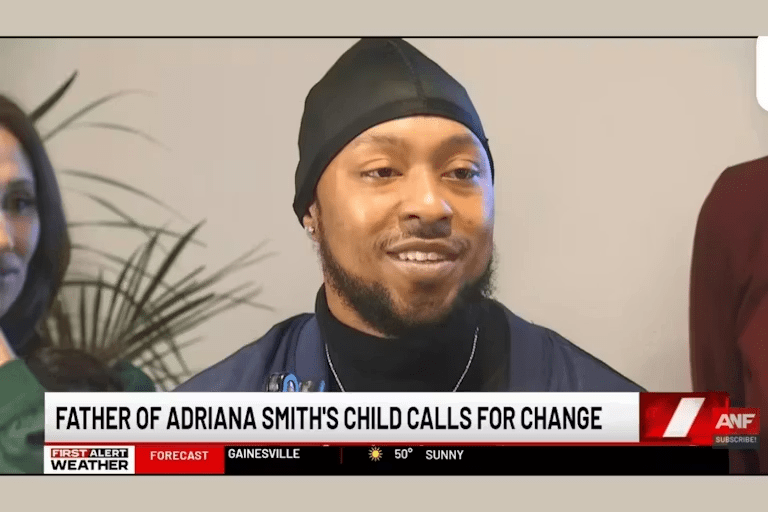
In December, a DeKalb County Superior Court judge awarded full legal and physical custody of an infant boy, Chance, to his biological father, Adrian Harden. The ruling followed months of legal uncertainty after Chance’s mother, Adriana Smith, died following a catastrophic medical emergency earlier this year.
Tragedy Meets Bureaucracy
Smith, a 30-year-old nurse, suffered severe headaches in early 2025. Within days, doctors discovered multiple blood clots in her brain. She was declared brain dead in February while approximately nine weeks pregnant. After months on life support, Chance was delivered prematurely by emergency C-section in June, weighing just under two pounds. Smith passed away days later.
While the medical and ethical debates surrounding Smith’s care dominated national headlines earlier this year, a quieter crisis emerged behind the scenes: despite being Chance’s biological father, Harden had no automatic parental rights under Georgia law because he and Smith were not married.
Without swift court action, Chance faced the real possibility of being placed into foster care through the Department of Family and Children’s Services—despite having a willing, capable parent ready to bring him home.
An Outdated Legal Barrier
Georgia remains one of the few states that still requires unmarried fathers to file a formal “legitimation” petition to be legally recognized as parents. DNA proof, a birth certificate, or years of involvement are not enough on their own. Until legitimation occurs, the law treats the father as a legal stranger.
Harden’s legal team filed an emergency petition in August. A temporary order allowed Chance to leave the hospital and live with his father in September. On December 2, Judge Latisha Dear-Jackson formally granted Harden sole custody.
The ruling brought relief—but also raised serious questions about why such hurdles exist at all.
A Center-Right Concern: Family Before the State
For many concerned citizens, this case cuts to a core principle: when a biological parent is ready and willing to care for a child, the law should not default to government custody.
Harden’s case highlights a center-right concern shared by families across political lines—the risk of bureaucratic overreach in family life. Foster care systems are designed for children with no safe alternatives, not as holding pens while parents fight procedural battles.
This is not an argument for dismantling child welfare protections. It is a call to modernize laws so they reflect reality, responsibility, and common sense—especially in moments of tragedy.
Calls for “Chance’s Law”
In response to the case, advocates have begun informally referring to potential reforms as “Chance’s Law”—a proposal that would automatically recognize biological fathers when paternity is undisputed, particularly in cases of maternal death or incapacitation.
As of now, no formal bill has been introduced in the Georgia legislature. But the case has sparked renewed discussion about whether laws written decades ago still serve the best interests of children today.
A Quiet Victory With Broader Implications
Harden has kept his public remarks focused on his son—not politics. He has spoken about seeing Smith’s spirit in Chance and about doing what any responsible parent would do: stepping up.
That simple act—taking responsibility for one’s child—should never require an emergency court battle.
As lawmakers prepare for the next legislative session, Chance’s story stands as a reminder that strong families are built not by red tape, but by recognizing parents who are ready to love, protect, and raise their children.
Support Independent Journalism
Florida Bay News is part of the Bay News Media Network — a growing group of independent, reader-supported newsrooms covering government accountability, courts, public safety, and institutional failures across the country.
Support independent journalism that isn’t funded by political parties, corporations, or government agencies
Submit tips or documents securely — if you see something wrong, we want to know
Independent reporting only works when readers stay engaged. Your attention, tips, and support help keep these stories alive.
 Florida Bay News
Leave a comment