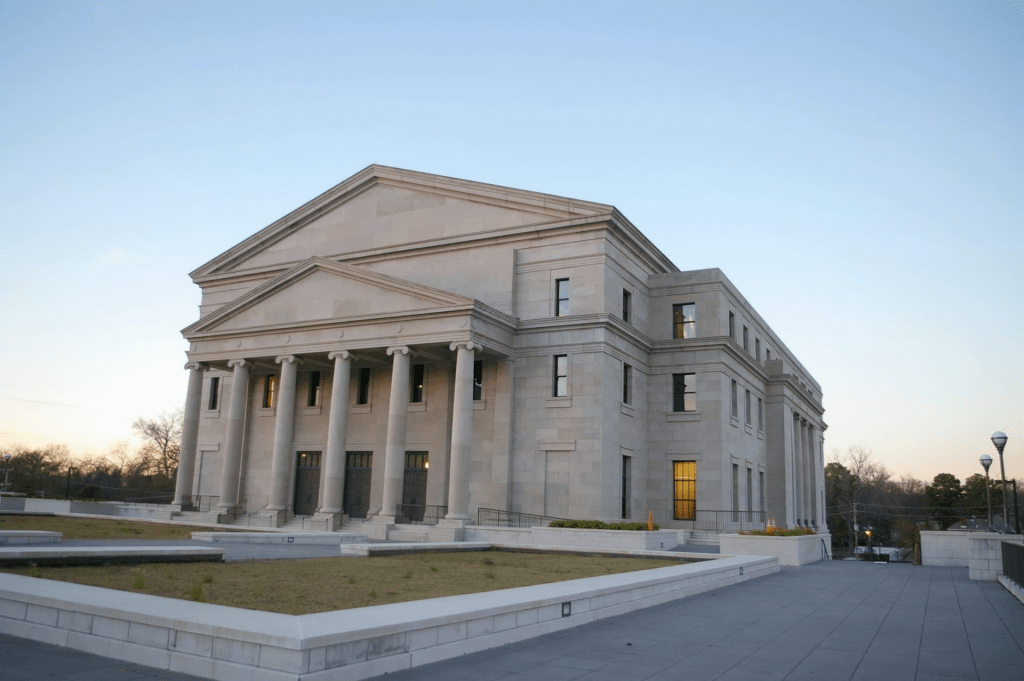
By Michael Phillips | FLBayNews
A federal court order mandating special elections for the Mississippi Supreme Court has ignited a broader debate over voting rights law, race-conscious remedies, and the proper role of federal courts in reshaping state judicial systems.
On December 19, 2025, U.S. District Judge Sharion Aycock ordered Mississippi to hold special, nonpartisan elections for its nine-member Supreme Court after ruling that the state’s decades-old judicial districts violate Section 2 of the Voting Rights Act (VRA). The decision follows her earlier August ruling that Mississippi’s current map unlawfully dilutes Black voting power by dividing the heavily Black Mississippi Delta across multiple districts.
What the Court Ordered
Judge Aycock gave the Mississippi Legislature until the end of its 2026 session to redraw the Supreme Court districts. Once a new map is approved, special elections are scheduled for November 2026. The judge will later determine which judicial seats are affected.
If lawmakers fail to act—or adopt a map the court finds inadequate—the federal court may impose its own districting plan.
The case stems from a lawsuit filed in 2022 by Black civic leaders, represented by the American Civil Liberties Union, the Southern Poverty Law Center, and other co-counsel. Plaintiffs argued that Mississippi’s three-district system for electing Supreme Court justices—unchanged since 1987—prevents Black voters from electing candidates of their choice despite the state being nearly 40 percent Black.
A Rare Intervention Into Judicial Elections
Unlike legislative redistricting, federal intervention into state judicial election systems is relatively uncommon. Mississippi elects its justices in nonpartisan races, and supporters of the existing system argue that judicial independence depends on minimizing racial and partisan pressures.
Critics of the ruling warn that redrawing judicial districts explicitly to produce additional majority-Black seats risks politicizing the judiciary and injecting race-based calculations into what are supposed to be neutral legal roles.
Mississippi officials have maintained that the current system already provides meaningful Black voter influence, noting that one district has a Black voting-age majority and that Black justices have served—albeit primarily through appointment rather than election.
Section 2 Under National Scrutiny
The timing of the ruling adds to its uncertainty. Mississippi’s appeal of the August decision is currently paused at the Fifth Circuit Court of Appeals, pending U.S. Supreme Court rulings in other Section 2 cases. Conservative justices have increasingly questioned whether the Voting Rights Act should continue to require race-conscious remedies decades after the end of legally enforced segregation.
At issue is whether Section 2 was intended to prevent explicit discrimination—or to guarantee proportional racial outcomes in modern elections. A future Supreme Court decision narrowing Section 2 could weaken or even undo the Mississippi ruling altogether.
The Colorblind Constitution Debate
From a center-right perspective, the case highlights a growing constitutional tension. Many legal conservatives argue that repeatedly redrawing districts based on race—even for remedial purposes—conflicts with the Equal Protection Clause of the Fourteenth Amendment.
They contend that elections should treat voters as individuals, not as members of racial blocs, and warn that perpetual race-based districting risks entrenching divisions rather than moving toward a genuinely colorblind legal system.
Supporters of the ruling counter that racially polarized voting still exists and that without judicial intervention, minority voters will continue to face structural barriers to representation—even in nonpartisan judicial elections.
What Comes Next
For now, the responsibility rests with the Mississippi Legislature to craft a new map that satisfies the court while withstanding constitutional scrutiny. How lawmakers navigate that challenge—and how higher courts ultimately rule on Section 2—will shape not only Mississippi’s judiciary, but the future of voting rights enforcement nationwide.
As the 2026 deadline approaches, Mississippi’s Supreme Court has become a focal point in a much larger national debate: how to balance civil rights protections with constitutional limits, and how far courts should go in reshaping democratic institutions in the name of representation.
Support Independent Journalism
Florida Bay News is part of the Bay News Media Network — a growing group of independent, reader-supported newsrooms covering government accountability, courts, public safety, and institutional failures across the country.
Support independent journalism that isn’t funded by political parties, corporations, or government agencies
Submit tips or documents securely — if you see something wrong, we want to know
Independent reporting only works when readers stay engaged. Your attention, tips, and support help keep these stories alive.
 Florida Bay News
Leave a comment