By Michael Phillips | FLBayNews
Recent headlines warning that “more people are leaving Florida” risk oversimplifying what is actually a far more nuanced — and far less alarming — shift underway in the Sunshine State.
A December 17, 2025 Miami Herald report highlights a slowdown in domestic migration to Florida, noting that high housing costs, rising insurance premiums, and broader affordability pressures have cooled the pandemic-era surge of newcomers. The data is real. The conclusions, however, deserve context.
Florida is not emptying out. It is normalizing.
From Pandemic Surge to Pre-Pandemic Reality
During the COVID years, Florida experienced an extraordinary migration boom as Americans fled lockdown-heavy states, high taxes, and cold climates. That surge was never sustainable.
According to U.S. Census Bureau estimates, Florida’s net domestic migration peaked at nearly 250,000 people in 2022, then fell to roughly 126,000 in 2023, with newer estimates placing it between 63,000 and 126,000. That level mirrors pre-pandemic norms — not decline.
At the same time, Florida’s total population still grew by approximately 467,000 residents, reaching more than 23.3 million people, one of the fastest growth rates in the nation. The difference? Growth is now driven primarily by international migration, not domestic relocation.
That is not collapse. That is recalibration.
Housing Costs Are Real — But Highly Regional
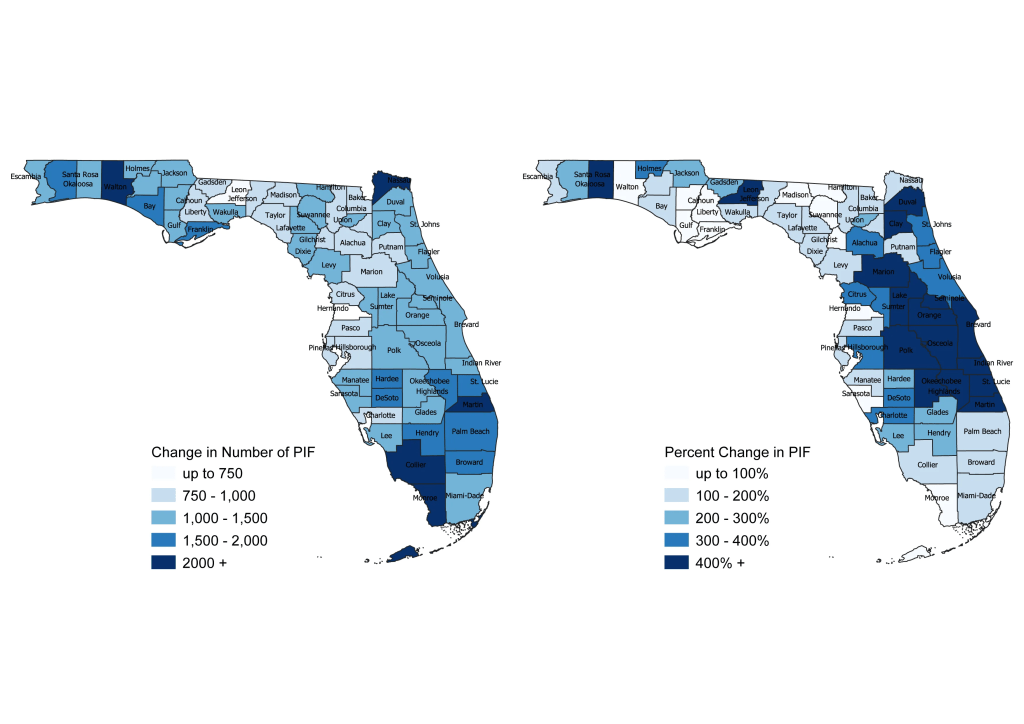
Affordability pressures are undeniable, particularly in South Florida’s coastal metros, where monthly homeowner costs can exceed $4,000, consuming more than 60% of median household income. Insurance premiums remain elevated, and younger adults are understandably more price-sensitive.
But what many national and left-leaning outlets fail to emphasize is this: many Floridians aren’t leaving the state — they’re moving within it.
Inland and northern regions like Orlando, Ocala, Jacksonville, Polk County, and Volusia County continue to see strong inflows. Florida remains one of the top states for total movers nationwide. The migration story is selective, not mass flight.
Insurance Reforms Are Beginning to Work
Much coverage frames Florida’s insurance market as spiraling endlessly upward. That was true — until reforms passed in 2022 and 2023.
Since then:
- Homeowners insurance rate increases have slowed dramatically, among the lowest nationally in 2024.
- Property insurance litigation has dropped sharply, with claims down about 25% in early 2025.
- More than 14 new insurers have entered Florida’s market.
- Over 120 residential insurance filings in 2025 involve rate holds or decreases.
- Auto insurers, including Progressive, have issued refunds totaling roughly $1 billion.
These developments rarely make headlines, yet they matter. Stabilization takes time, and early indicators suggest Florida’s reforms are beginning to restore competition — precisely what critics said was impossible.
Demographics Are Shifting — Not Collapsing
Younger adults in their 20s are leaving faster than they arrive, while retirees and residents over 50 continue moving in. That presents workforce challenges, but it also reflects national trends in housing affordability and remote work.
Meanwhile, Florida continues to generate roughly one in every eleven new U.S. jobs, maintains strong GDP growth, and benefits from a no state income tax — a policy advantage that has not diminished.
A Cooler Market, Not a Crisis
The pandemic distorted migration patterns nationwide. Florida’s return to historical norms should not be mistaken for failure. Even major moving companies still rank Florida among the top destinations for overall movers.
The state’s appeal — climate, opportunity, tax structure, and economic dynamism — remains intact. What has changed is the pace, not the direction.
Florida’s post-pandemic boom didn’t vanish. It settled.
For concerned citizens, the takeaway is this: affordability challenges must be addressed, especially for working families and young professionals — but the narrative of a Florida “exodus” is overstated. The data shows resilience, adaptation, and continued growth — just without the frenzy of an unprecedented moment in history.
Florida isn’t losing its edge. It’s entering its next phase.
 Florida Bay News
Leave a comment