By Michael Phillips | FLBayNews
Florida politics seldom take the slow lane—and this week, they accelerated again.
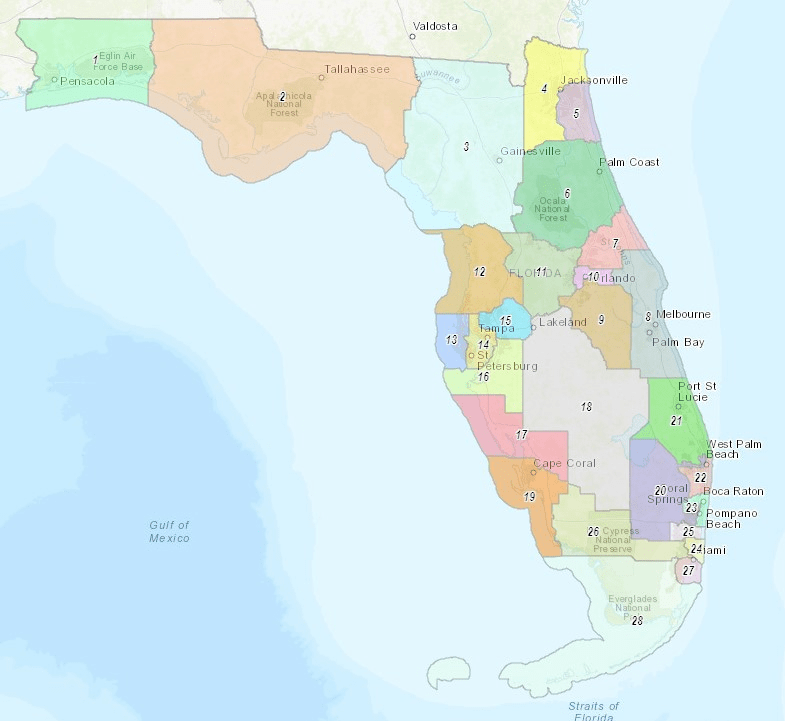
A new report from The New York Times highlights an aggressive push by Republican lawmakers and Gov. Ron DeSantis to redraw Florida’s congressional map mid-decade, an extremely rare move outside the normal census cycle. Supporters argue Florida was shortchanged in 2020, gaining only one U.S. House seat despite massive population growth. Critics call it a partisan power grab.
For Florida’s voters, the real issue is bigger: representation, federal influence, and whether Washington has ignored the nation’s fastest-growing state for far too long.
Why Florida Republicans Say a Redraw Is Necessary
Florida Republicans are making a direct argument:
1. Florida’s Population Growth Was Undercounted During COVID
State leaders have long argued the 2020 Census missed hundreds of thousands of Florida residents.
If more accurate numbers had been used, analysts estimate Florida should have gained two—possibly even three—new House seats instead of just one.
That undercount meant:
- Fewer seats in Congress
- Less influence in national policy
- Less federal funding tied to population metrics
Republican lawmakers see mid-cycle redistricting as a legitimate remedy.
2. Florida Is Legally Allowed to Redraw Maps Mid-Decade
Unlike some states, Florida’s constitution does not prohibit redistricting outside the ten-year cycle, so long as it complies with:
- Federal law
- The Voting Rights Act
- The state’s Fair Districts amendments
Mid-decade redraws are rare—but not illegal.
3. The Current Map Was Already a Correction to the Courts
In 2022, DeSantis rejected the Legislature’s map and insisted on a cleaner, more compact version that removed racial gerrymanders. Republicans argue the map upheld by the Florida Supreme Court this year confirms they were on the right path.
Why Critics Are Sounding the Alarm
The Times article—and Democrats nationwide—frame this move as an unprecedented power play.
1. Fear of Losing Their Last Remaining Competitive Districts
Florida Democrats have lost significant political ground.
A mid-decade redraw could further solidify the GOP’s 20–8 congressional advantage—or expand it.
2. Concerns Over Voting Rights Act Issues
Civil rights groups argue the 2022 DeSantis map diminished minority influence in North Florida. A new map could face fresh challenges, even with the state Supreme Court already siding with DeSantis.
3. National Democrats Worry About 2026 House Control
Florida’s size means even one new seat could swing the narrow House majority in the next Congress.
What This Means for Florida Voters
Regardless of party, Floridians should understand the stakes.
Florida is growing—and Washington hasn’t kept up
Florida gained nearly a million residents between 2020 and 2024.
If Florida were a country, its population growth rate would rank among the fastest in the Western Hemisphere.
Yet the state:
- Gained only one House seat
- Lost billions in federal funding due to undercount
- Remains underrepresented relative to Texas, California, and New York populations
Republicans See a Constitutional Obligation
Their argument:
If the census failed, Florida shouldn’t be punished for it.
Democrats See a Political Chess Move
Their argument:
Voters shouldn’t face map changes this close to another election.
Voters Deserve Accurate Representation—Not Census Politics
The most important question isn’t whether Republicans or Democrats win seats.
It’s this:
Does Florida have the representation it earned?
Census errors aren’t abstract—they affect:
- The weight of your vote
- How many federal dollars flow to Florida communities
- How much clout Florida has in national debates
If Washington failed to count Florida accurately, correcting that mistake isn’t just legal—it’s responsible governance.
Mid-decade redistricting is unusual, but so was the unprecedented undercount of 2020.
Looking Ahead: What Floridians Should Watch
Expect a fierce fight in the coming legislative session over:
- Whether the Legislature will propose adding new districts
- How districts in Tampa Bay, Orlando, Jacksonville, and Miami could change
- Whether courts intervene again
- How quickly new maps could take effect
A political storm is coming—but Floridians deserve clarity, transparency, and a map that reflects the truth on the ground: Florida is bigger, stronger, and growing faster than the federal government acknowledges.
 Florida Bay News
Leave a comment