By Michael Phillips | FLBayNews
Florida once again holds a heartbreaking distinction: the top state in the nation for child drownings. According to new data highlighted in WINK News’ investigative report, Florida lost 98 children to drowning in 2023, and 2024 is on pace to match or exceed that toll. For parents, grandparents, and communities across the state, the numbers are more than statistics — they reflect a persistent public-safety crisis that has resisted decades of warnings.
Now, Florida lawmakers are signaling that 2026 may finally be the year meaningful reforms advance. But the debate is far from settled.
A Silent, Everyday Threat
Unlike hurricanes, wildfires, or violent crime, drowning rarely makes headlines — yet it remains the number one cause of accidental death for Florida children ages 1–4.
The common factors are painfully familiar:
- Unfenced pools
- Unlocked doors
- Unattended backyard water features
- Temporary distractions inside the home
- Lack of swim lessons for young children
Safety advocates say these small, momentary lapses — combined with Florida’s sheer density of pools and waterways — create a deadly environment for toddlers and pre-schoolers.
“This is not a freak accident problem,” one water-safety expert told WINK. “This is a predictable and preventable pattern.”
Lawmakers Renew Push for Safety Standards
In response, Florida’s Legislature is considering a set of expanded safety requirements aimed at stopping preventable drownings before they occur.
Potential 2026 measures lawmakers are discussing include:
- Mandatory pool barriers for all residential pools, not just newly built ones
- Clear statewide labeling requirements for pool alarms, gates, and safety equipment
- A uniform inspection system so renters and homeowners are equally protected
- Boosted investments in free infant swim lessons
- Public-awareness campaigns tied to pediatric clinics and childcare centers
One proposal gaining traction would require all home sales and rentals to include a pool-safety disclosure — similar to hurricane shutters, flood zones, or roof age.
“We disclose everything in Florida — except the thing most likely to kill a toddler,” a legislator told WINK News.
The Battle Over Regulations and Freedom
Not all lawmakers agree. Some argue that expanded pool-barrier requirements would amount to a government intrusion into private property rights. Others maintain that the state should focus on education, not mandates.
Property-rights advocates warn:
- Installations can be expensive
- Landlords could face new liabilities
- Aging retirees may struggle with compliance
But supporters counter that pool-fence costs are far lower than the ER, ICU, and lifetime therapy costs many families face after a non-fatal drowning.
“A fence costs a few hundred dollars,” one advocate said. “A brain injury costs millions.”
The Emotional Toll: Families Pushing for Change
Behind the policy debate are parents who live with the painful aftermath. Many have now become activists, joining coalitions pushing for standardized rules.
Several families interviewed in the WINK investigation said the same thing:
“I thought it could never happen to me.”
Each of them once believed they were cautious enough — until one unguarded moment stole their child’s life.
What Florida Communities Can Do Right Now
Experts say solutions cannot wait for Tallahassee. Every household and neighborhood association can take immediate action:
Primary Safety Steps:
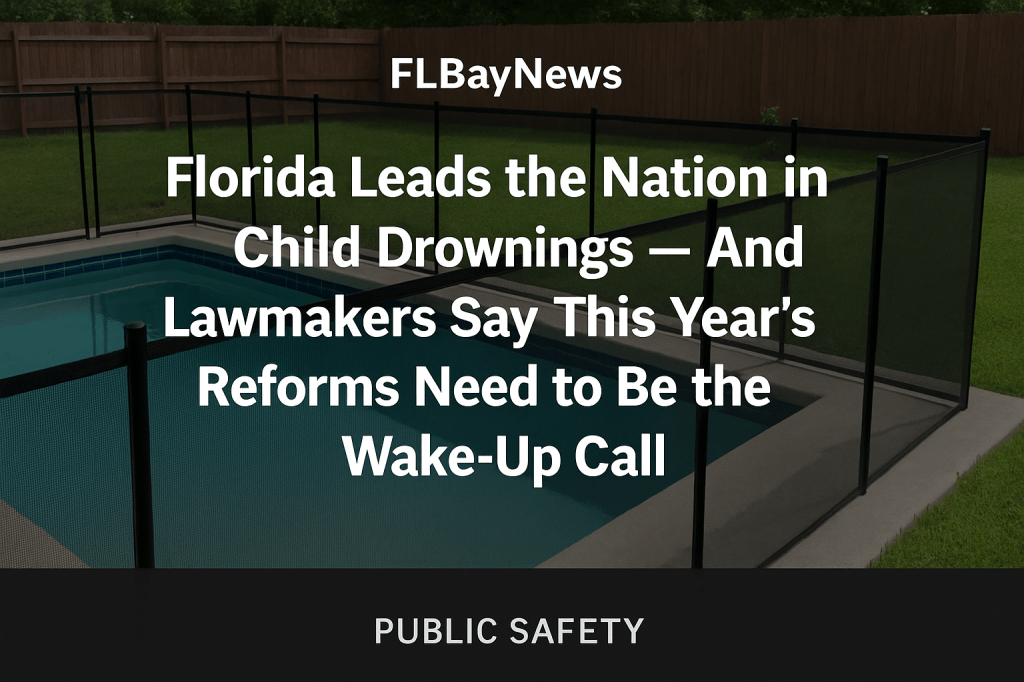
- Install four-sided isolation fencing with self-closing, self-latching gates
- Add door alarms or contact sensors leading to pool areas
- Ensure all caretakers know CPR
- Provide swim lessons early, ideally by age 1
- Never rely on a single safety measure — “layers of protection” are key
Local governments can also strengthen enforcement of existing codes, expand public swim programs, and partner with schools and pediatricians on education efforts.
Bottom Line: Florida Can’t Afford Another Record Year
Child drownings are not random tragedies — they are failures of policy, awareness, and design. Florida’s lawmakers now face a choice: continue issuing warnings, or finally put enforceable statewide standards in place.
Parents, homeowners, and community leaders will play a major role in shaping what comes next. Because in a state surrounded by water, the difference between life and death is often as simple as a fence, an alarm, or one extra precaution.
 Florida Bay News
Leave a comment